

Ep. 137 — Barrel Children And The Stories Caribbean Film Can Hold with Meschida Philip
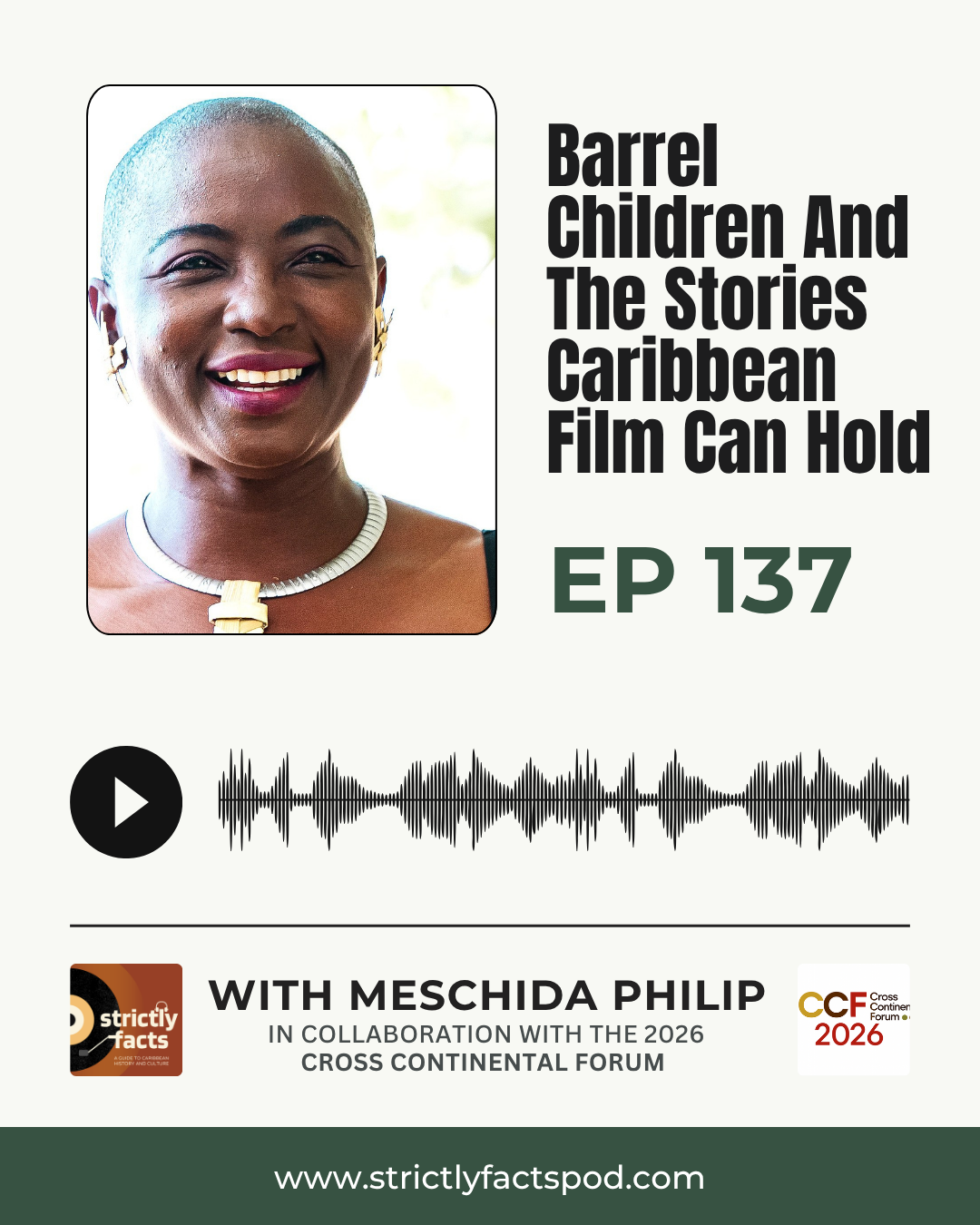
A child grows up learning that love can arrive in a barrel, but comfort cannot. That tension sits at the heart of our conversation with Grenadian director, producer, and creative industry strategist Meschida Phillip, whose documentary work asks what migration costs families long after the plane takes off. We trace how the Grenada Revolution, early separation, and years of “waiting” shaped her sense of connection and pushed her toward filmmaking as a way to name what Caribbean families often keep silent.
Meschida shares the story behind her feature documentary Scars of Our Mother’s Dreams, grounded in Dr. Claudette Crawford-Brown’s concept of “barrel children,” where parents migrate for opportunity while children remain at home with relatives. We talk about emotional trauma, reunification, and why seeing these stories on screen lands differently than reading them. Meschida also pulls back the curtain on responsible documentary practice, from deep research and interviews to building a film that works as an archive and a conversation starter for Caribbean history, culture, and healing. We then zoom out to the film industry itself, including Caribbean Tales Media Group’s Cross-Continental Forum and what Black diaspora collaboration can look like when it’s intentional. Meschida breaks down the real barriers Caribbean filmmakers face funding infrastructure, banking access, co-production limits, and distribution networks and paints a vivid vision of Global South co-production funds, direct Caribbean Africa pipelines, and a market that rewards cultural specificity instead of asking creators to dilute it.
Meschida Philip is a filmmaker, producer, creative-industry strategist, Executive Director of Mprojekts Creative Group, and Founder and Festival Director of the 12°N, 61°W Grenada Film Festival. She is a director, producer, and creative industries strategist working at the intersection of film production and screen industry development in the Caribbean. With over 20 years of professional experience, including more than a decade leading regional initiatives, her work focuses on positioning the Caribbean as an originating creative economy, capable of developing, financing, and exporting its own stories through equitable international co-production. Her work spans both content creation and industry development, with a focus on co-production frameworks, talent pipelines, and market access for creators in small island developing states.
Editor's Note: Philips participated in the Cross-Continental Forum with Canary, a documentary project that was in development at the time. She is credited as the project’s director and co-producer. Scars of Our Mother’s Dreams was not the project presented at the Forum, however it was screened at the festival.
About The Cross Continental Forum
This episode was created in collaboration with Caribbean Tales Media Group to highlight the annual Cross-Continental Forum, a curated, decolonial co-production hub specifically designed to connect Black producers across Africa, the Caribbean, Canada, Europe and the Americas. It offers a structured pathway from information sharing to treaty-driven deals and market access. As an intensive hybrid accelerator, it functions as a “strategic gateway” to co-productions, beginning with an online Accelerator covering legal, financial and distribution frameworks, followed by two in-person events including a pitch showcase.
The program’s decolonial framing is not cosmetic; unlike other industry events, it is designed toempower Black and Global Majority companies, and foregrounds Black and Global Majority Diasporic storytelling traditions, providing a development-to-deal pipeline, across multipleregions into one comprehensive package.
CCF facilitates vital connections between producers from the Caribbean, North America, Africa,and the UK, alongside international buyers, distributors, investors, and industry executives. These meetings foster global partnerships, expand co-production opportunities, and amplifyCaribbean stories in the international market.
The forum aims to inspire new treaties between Canada, the Caribbean, and other globalpartners to boost co-production and diversify storytelling. It prioritizes empowering Black and Global Majority companies, fostering strong networks, and promoting knowledge exchange toaddress the critical need for representation in media.
By connecting diverse producers and providing access to decision-makers, the initiative enhances global collaboration, enriches cultural narratives, and strengthens market access for racialized creators, paving the way for innovative, inclusive projects.
Foster strategic partnerships between Black and Global Majority producers from Canada, Africa, the Caribbean, the UK, and Latin America, leveraging shared cultural narratives and production capabilities.
Enable Black and Global Majority producers to access multiple funding streams through the UK, Caribbean, Canada, and African co-production treaties, agreements, and incentives.
Enhance Black and Global Majority producers’ ability to enter international markets through South Africa’s strategic location and incentives.
Create pathways for Black and Global Majority content to reach audiences internationally. Implement strategic and beneficial co-production frameworks spanning all participating regions. Leverage combined tax incentives and rebates across all participating territories to benefit Black & Global Majority producers.
Support Black and Global Majority storytelling while amplifying Global South voices in the international screen industry.
Generate cross-continental employment opportunities for Black and Global Majority producers in production.
View the Strictly Facts Syllabus for more resources on this episode.