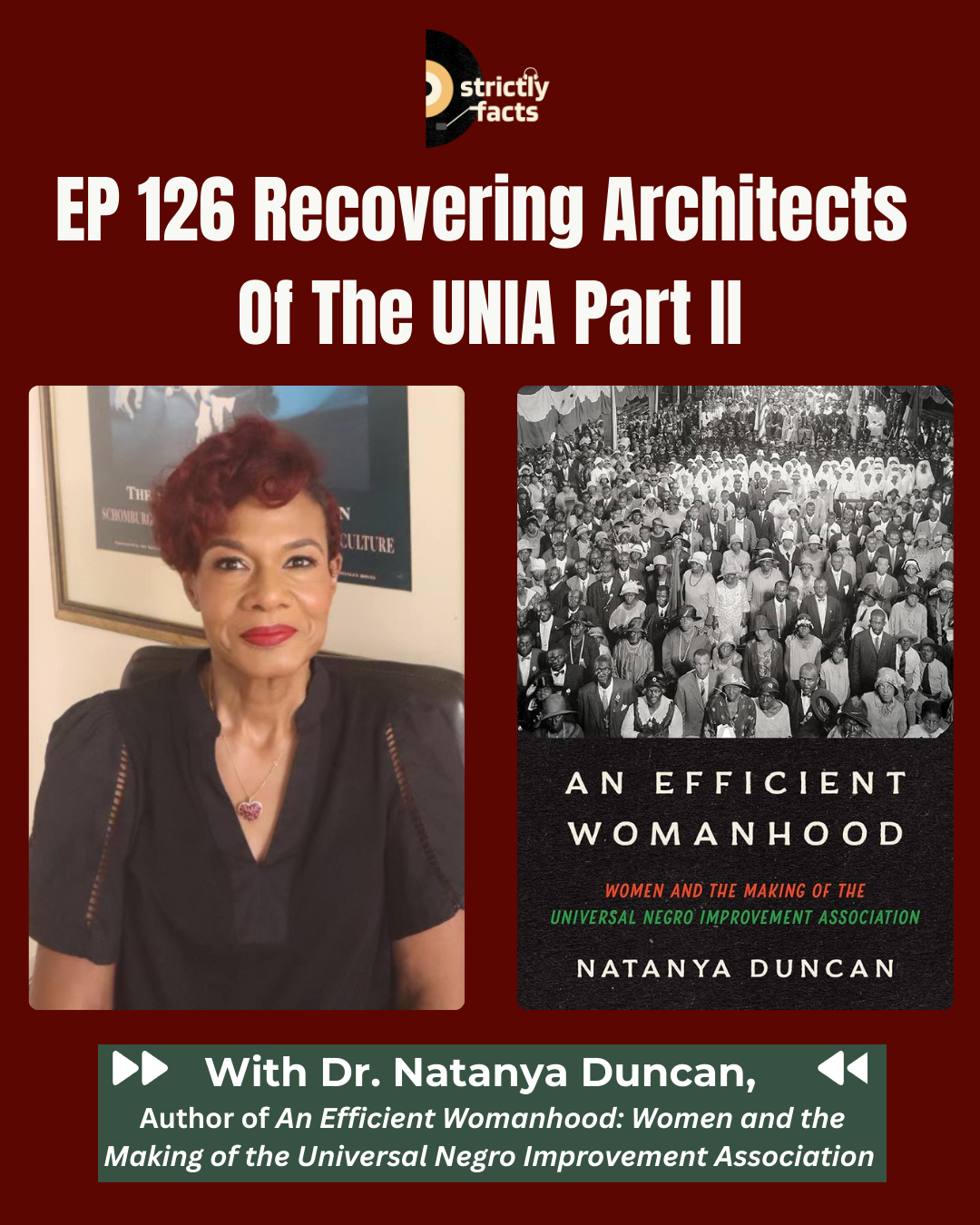
Ep. 127 — Recovering Architects Of The UNIA with Dr. Natanya Duncan Part II
A woman signs up 3,000 new members, walks into a meeting she was invited to lead, and is assassinated at the podium. That single moment opens a window into the hidden architecture of a global movement and the women who kept it alive when headlines and historians looked away. We continue our conversation with Dr. Natanya Duncan to explore the life and legacy of Princess Laura Adorkor Kofey and the broader force she represents: efficient womanhood inside the Universal Negro Improvement Association. We unpack how Kofey leveraged overlapping memberships across Black political organizations to grow the UNIA at scale, and why her ability to mobilize made her both indispensable and threatening. Dr. Duncan traces archival breadcrumbs to show how debates about Kofey’s origins obscured the central question: who shot her, and what does that reveal about power, loyalty, and gender in mass movements?
We broaden the lens to spotlight women like Henrietta Vinton Davis who signed stock certificates and underwrote the Black Star Line, illustrating how everyday decisions about money, mutual aid, and accountability built real infrastructure. This isn’t just civil rights history; it’s a blueprint for Black autonomy and human rights that shaped the tactics of later movements and still resonates now. Tune in, rethink the narrative, and help surface the names and questions that deserve daylight.
City University of New York Associate Professor of History, Dr. Natanya Duncan's research and teaching focuses on global freedom movements of the 20th and 21st Century. Duncan’s research interest includes constructions of identity and nation building amongst women of color; migrations; color and class in Diasporic communities; and the engagements of intellectuals throughout the African Diaspora. Her book, An Efficient Womanhood: Women and the Making of the Universal Negro Improvement Association, (University of North Carolina Press 2025) focuses on the distinct activist strategies in-acted by women in the UNIA, which Duncan calls an efficient womanhood. Following the ways women in the UNIA scripted their own understanding of Pan Africanism, Black Nationalism and constructions of Diasporic Blackness, the work traces the blending of nationalist and gendered concerns amongst known and lesser known Garveyite women.
View the Strictly Facts Syllabus for more resources on this episode.